



In the other method of recording depreciation, an account in the name of accumulated depreciation is created. This account is used to accumulate the total depreciation throughout the life of an asset. Hence, the amount of accumulated depreciation at the end of the third year is $3,000 which will be included in the balance sheet as the contra https://hamadakaizen.com.br/credit-limit-calculator-for-businesses/ account for the cost of equipment. Likewise, the net book value of the equipment is $2,000 at the end of the third year. The period of time that assets provide value to company is called useful life.

What happens when an asset is fully depreciated?
It is recorded in both the balance sheet and the income statement and has an impact on the net income and cash flow of a company. Companies must use a consistent and appropriate method to calculate depreciation in accordance with GAAP. Using the straight-line method, the company charges depreciation of $1,000,000 in the books of accounts every year. At the beginning of the accounting year 2018, the balance of the plant and machinery account was $7,000,000, and the balance of the accumulated depreciation account was $3,000,000. During the year, the company made no purchases and sales concerning its plant and machinery. Having a clear capitalization limit keeps your financial reporting consistent and ensures small, lower-cost items don’t clutter your fixed asset records.
Depreciation expense
- That is why capital assets must be capitalized and depreciated on a systematic and consistent basis.
- Are you confused about the calculation of the depreciation entry in Accounting?
- Since the asset had a net book value of 3,000 the profit on disposal is calculated as follows.
- Sometimes referred to as PPE (Property, Plant & Equipment), they are physical items held for use to operate a business.
- A loss on disposal will reduce net income, while a gain on disposal will increase it.
To calculate depreciation using the straight-line method, you divide the cost of the asset by its useful life. For example, if a company purchases a machine for $100,000 with a useful life of 10 years, the annual depreciation expense would be $10,000 ($100,000 divided by 10 years). There are several methods of depreciation, including straight-line, declining balance, sum-of-the-years’-digits, and units of production. The main difference between these methods is the way in which they allocate the cost of the asset over its useful life. Straight-line depreciation allocates the cost evenly over the useful life, while declining balance depreciation allocates more of the cost in the early years of the asset’s life.
- Instead, the company would add back the depreciation expense to the net income when calculating its cash flow.
- The journal entry for depreciation in manufacturing is a debit to Depreciation Expense and a credit to Accumulated Depreciation.
- In this method, the value of the asset is recorded as the net amount in the balance sheet.
- In the Spivey example, we assumed that the assets were purchased on the 1st day of the month, but of course, that is not usually the case.
- Individuals and businesses can use such assets for as long as they want.
- Furthermore once the sale of the fixed assets has been completed, the business must account for the proceeds from the sale in its financial statements.
- When using this method, depreciation is not credited to the asset account.
Types of Depreciation Journal Entry
On track for 90% automation by 2027, HighRadius is driving toward full finance autonomy. Journal Entry Management software impacts the financial close process, allowing firms to achieve a 30% reduction in days to close. This function provides automated posting alternatives, which considerably speeds up the total closing Accounting Periods and Methods process while maintaining accuracy. The Maker Checker Workflow adds to the efficiency of the financial close process by segregation of responsibilities and enabling the monitoring of priority tasks.
- It specifically covers IAS 16 – Property, Plant and Equipment, and teaching students how to classify the cost of a tangible asset over its useful life.
- You’ve chosen the straight-line depreciation method, which spreads the cost evenly over the asset’s useful life.
- Let’s assume that a piece of machinery worth 100,000 was purchased on April 1st 2023, with a scrap value of nil and a depreciation rate of 10% (straight-line method).
- There are different types of journal entry methods that businesses can use.
- In other words, this is a part of the machine cost that can be depreciated.
- Since these assets provide benefits over multiple accounting periods, it would be misleading to expense their full cost in the year of purchase.
How Emagia Simplifies Depreciation Tracking and Journal Entries
- It involves adding together each year in an asset’s useful life and then using that sum to calculate a percentage representing the remaining useful life of the asset.
- NetgainAI has been trained with the deep product knowledge of our development, product, and implementation teams.
- As can be seen the ‘profit’ on disposal is negative indicating that the business actually made a loss on disposal of the asset.
- Each scenario requires specific journal entries to maintain accuracy in financial reporting, and failure to execute these properly can lead to significant discrepancies in financial reporting.
- In the real world, a company cannot have negative cash, or it would be out of business.
Most computer programs support journal entry for depreciation all these conventions and more, such as the half-year convention required for tax purposes in certain circumstances. Some firms calculate depreciation from the middle of the month of purchase. For example, they treat an asset purchased on any day of the month as if it were purchased on the 15th day of the month.
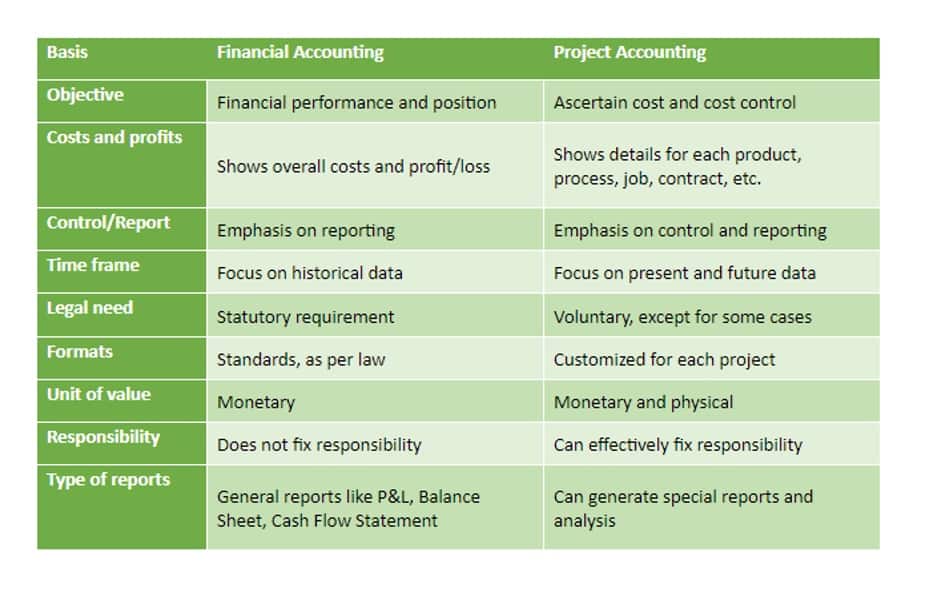

This method is used when an asset is expected to lose its value more quickly in the early years of its useful life. The two most common accelerated depreciation methods are double-declining balance and sum-of-years’ digits. This expense is presented in the income statement while the accumulated depreciation is presented in the Balance Sheet as the contra account of the fixed assets.

This method of depreciation is another accelerated depreciation method. It involves adding together each year in an asset’s useful life and then using that sum to calculate a percentage representing the remaining useful life of the asset. The percentage is then multiplied by the asset’s depreciable base, cost less salvage value, to arrive at the depreciation to be recognized each period. This method depreciates assets twice as fast as the straight-line method. Since fixed assets are used for a longer period of time, they are likely to devalue with use.